There is a difference between funeral flowers and sympathy flowers, and it matters. Funeral flowers are for the service. Sympathy flowers Sydney households receive are for the person left behind, in their kitchen, in the weeks that follow, when the phone has stopped ringing.
Most people send at the wrong moment. This guide explains what to send, when, and what to write, so that your gesture arrives when it is most needed rather than when it is most expected.
The Timing Insight That Changes Everything
In the first five days after a death, a grieving household is drowning. There are funeral directors, relatives arriving, paperwork, catering, and forty messages to answer. Flowers arriving in that window get put on a bench and barely registered.
Week two and three are the hard part. The service is over, the relatives have flown home, and the house is silent. Sympathy flowers Sydney recipients remember are the ones that arrive then.
If you can only send once, send late. If you can send twice, send something small immediately and something considered a fortnight later.
What to Send to a Home
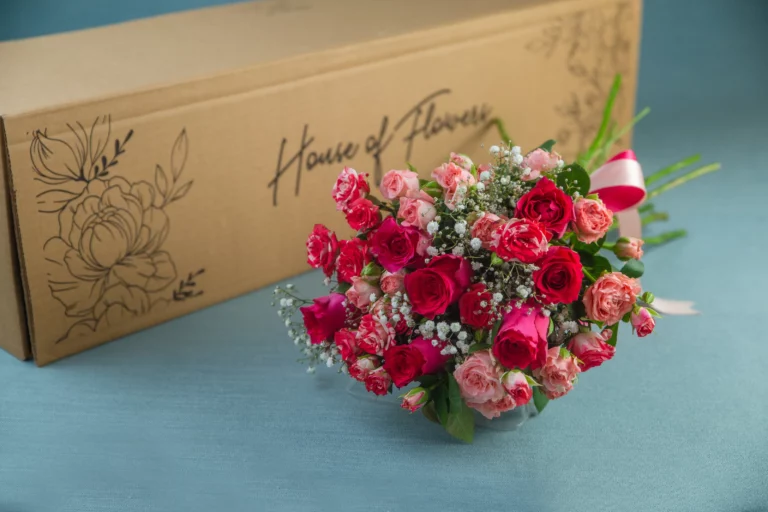
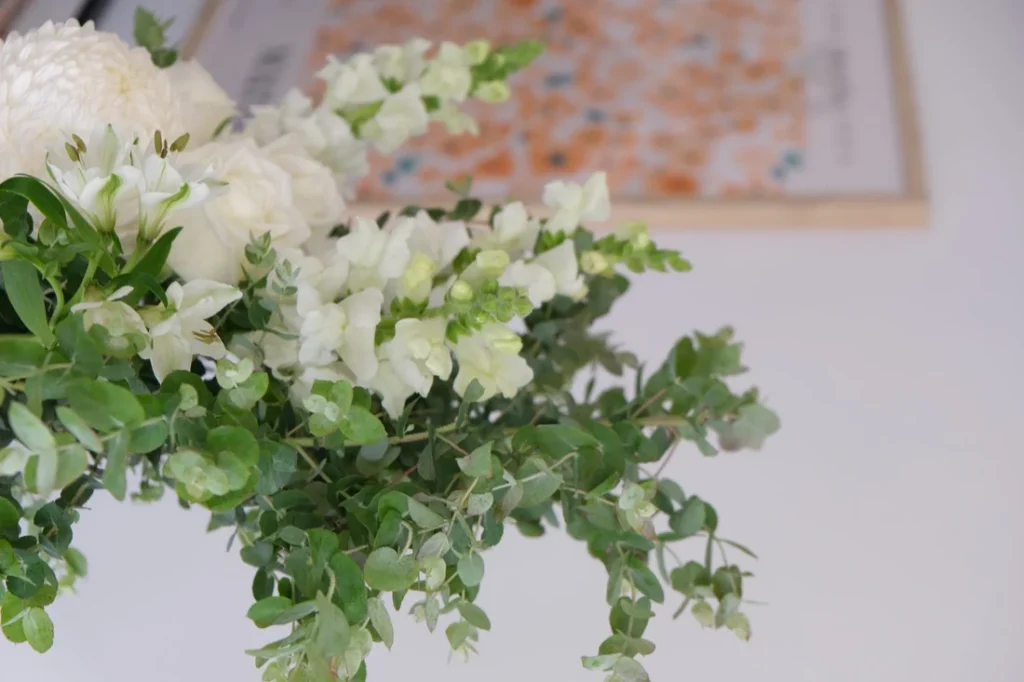
A vase arrangement, not a wrapped bouquet
This is the single most useful rule. A wrapped bouquet requires the recipient to find a vase, trim stems, fill water and arrange – a series of small tasks that feel enormous when you are grieving. A finished arrangement in a vessel requires nothing. Scale it down
A modest, beautiful arrangement on a kitchen bench serves better than a large formal piece. Grief is domestic. Keep the flowers domestic too.
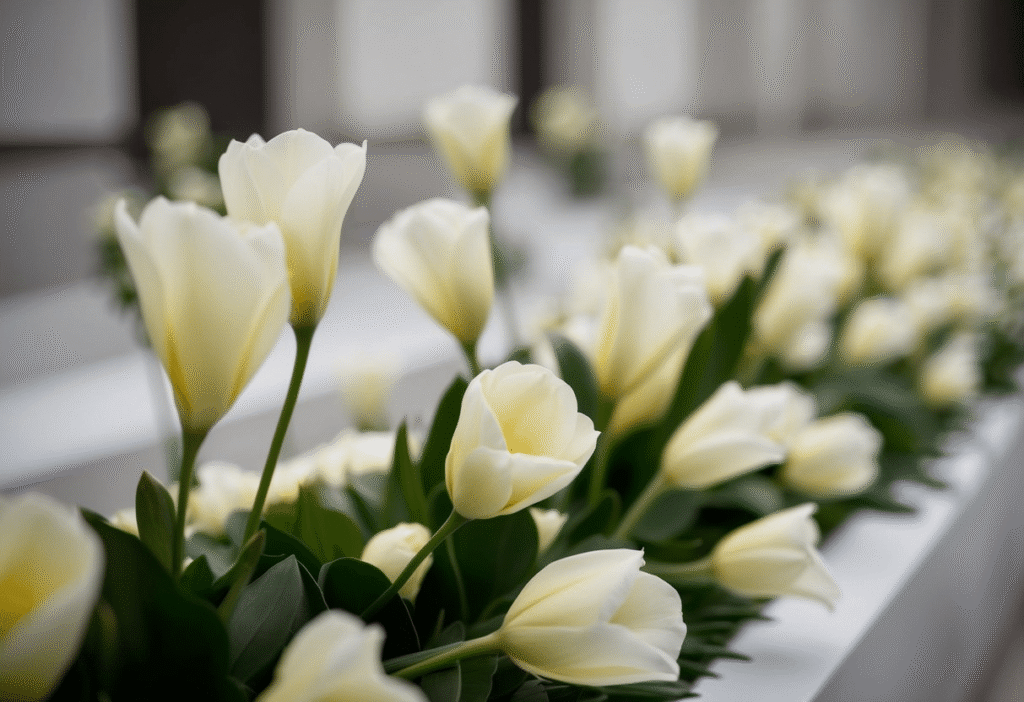
Palette
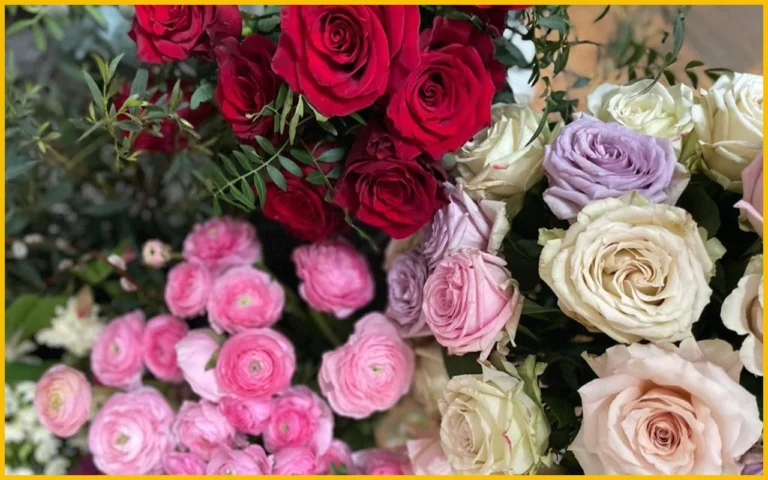
White, cream, soft green, blush and pale lavender. Restrained, calm, not funereal. Avoid stark all-white formality unless you know the family prefers it – it can feel like the service followed them home.
If the person who died was bright and unconventional, bright flowers are absolutely right. Many Sydney families now request exactly that.
Long-lasting stems
A grieving household will not be recutting stems. Choose blooms with genuine longevity:
- Chrysanthemum, in modern varieties
- Lisianthus
- Carnation, antique tones
- Orchid, cut or potted
- Native protea and banksia
- Hydrangea, which is generous and soft
- Alstroemeria, which lasts extraordinarily well
Consider a plant
A potted phalaenopsis orchid or peace lily lasts months, not days. For some people, watching something stay alive is genuinely comforting. For others it is a burden. Judge the person.
Watch: Keeping a Sympathy Arrangement Alive
If you are the one receiving flowers, or you want to pass on practical advice with the card, this covers the care that matters most for the soft-stemmed blooms common in sympathy work: How to Make Hydrangea Bouquets Last Longer. Clean vessel, immediate water, foliage removed – and the cold-water revival trick if heads droop.
What to Send to a Service Instead
If you are sending to the chapel rather than the home, you want a wreath, standing spray, sheaf or posy. Deliver to the funeral home about two hours before the service, addressed with the deceased’s full name and the service time, and the funeral director’s business name.
Sympathy flowers Sydney florists send to services are formal by convention. Sympathy flowers sent to homes should not be.
Cultural and Religious Considerations
Sydney is genuinely diverse and getting this wrong is easy to avoid.
Jewish families: flowers are traditionally not sent. Food delivered to the home during shiva is the appropriate gesture, as is a donation.
Muslim families: flowers are generally not customary. Practical help, food and a visit are more meaningful.
Hindu families: flowers are welcome, typically white or yellow, and garlands are traditional.
Buddhist families: white flowers are appropriate; avoid red.
Chinese families: white and yellow chrysanthemums are traditional for mourning. Avoid red entirely, which signifies celebration.
Greek and Italian Orthodox families: flowers are entirely standard and often generous.
When in doubt, ask a mutual friend rather than guessing.
What to Write
Brevity is kindness. Use the person’s name. Offer something concrete.
“Thinking of you. David was one of the good ones and I will miss him.”
“There is nothing useful to say. I am here, and I will keep checking in.”
“With love from all of us. Please let me bring dinner next week – I will text Tuesday.”
“Two weeks on and we are still thinking of you. Sending love.”
That last one, sent late, does more work than any bouquet sent in week one.
Avoid: “they’re in a better place”, “time heals”, “let me know if you need anything” (too vague to act on), and anything about God unless you know the family shares your faith.
Support Beyond Flowers
Flowers are a signal, not a solution. If the family is struggling, knowing where practical support exists is worth more than a second bouquet. National bereavement and mental health support services list free counselling and grief support pathways, and mentioning one gently in a follow-up message is often genuinely useful.
Research into bereavement outcomes through grief and counselling studies has consistently found that sustained, low-key contact over months matters more to recovery than intense support in the first week. A text on the six-month anniversary is worth more than a large arrangement on day three.
Practical Delivery Advice for Sydney
- Confirm someone will be home. Unattended sympathy flowers in a Sydney summer is a bad outcome. Provide a mobile number.
- Nominate a shaded safe place as a fallback.
- Skip strong scent if the household includes anyone unwell. Oriental lilies in particular are overpowering in a small apartment.
- Send to the workplace if a colleague has lost someone. A small arrangement on their desk on their first day back says the right thing without requiring conversation.
- Include your surname on the card. Grieving people cannot always place a first name.
- Do not send to a hospital after a death. Send to the home.
Group Sending
One well-made arrangement from a group beats several small ones. It looks considered, it costs each person less, and it does not fill a small house with vessels. Nominate one person to order, collect contributions afterwards, and put every name on the card.
A note on office sending: sympathy flowers Sydney workplaces send are often too corporate. Skip the branded ribbon and the company-logo card. Handwritten names read as human.
What Else to Send Instead of or Alongside Flowers
- A prepared meal or a meal-delivery credit
- A quality candle, which suits the moment better than most gifts
- A donation to the charity the family nominated
- A physical photograph of the person who died, framed
- A voucher for a house clean
- Simply turning up with coffee
Sympathy flowers Sydney households receive are best understood as the opening line of a longer conversation, not the whole of it.
The Bottom Line
Send sympathy flowers Sydney wide as a finished vase arrangement rather than a wrapped bouquet, keep the palette soft, choose long-lasting stems, and deliver in week two or three rather than the chaotic first few days. Write three short sentences using the person’s name, offer one concrete thing, and then follow up a month later. That combination is what people actually remember.